
What Is Dry Film Lamination?
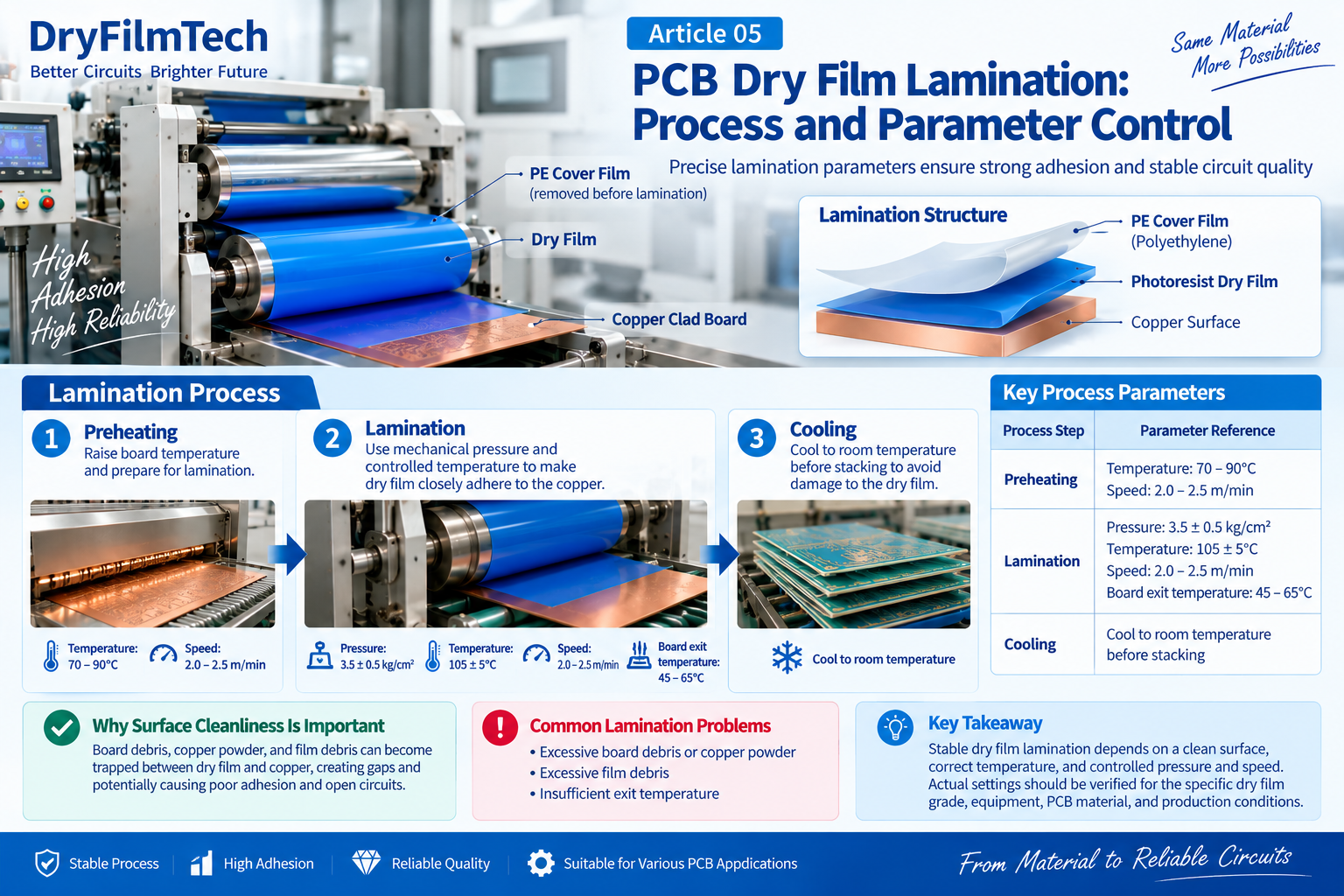
Dry film lamination uses mechanical pressure and controlled temperature to make dry film closely adhere to the copper surface.
Lamination Process
1. Preheating
Purpose: Raise board temperature and prepare for lamination.
Reference: 70–90°C; speed 2.0–2.5 m/min.
2. Lamination
Reference parameters:
- Pressure: 3.5 ± 0.5 kg/cm²
- Temperature: 105 ± 5°C
- Speed: 2.0–2.5 m/min
- Board exit temperature: 45–65°C
3. Cooling
After lamination, the board is cooled to room temperature before stacking to reduce the risk of damage to the laminated dry film.
Why Is Surface Cleanliness Important?
Board debris, copper powder, and film debris can become trapped between dry film and copper, creating gaps and potentially causing poor adhesion and open circuits.
Common Lamination Problems
- Excessive board debris or copper powder
- Excessive film debris
- Insufficient exit temperature
Conclusion
Stable dry film lamination depends on a clean surface, correct temperature, and controlled pressure and speed. Actual settings should be verified for the specific dry film grade, equipment, PCB material, and production conditions.